How to Measure a Door the Right Way in Millimetres
If you’re wondering how to measure a door, you should know that getting your door measurements right is essential for a flawless fit, helping you avoid draughts, sticking, and unnecessary adjustments later on. In this guide, we’ll walk you through the process of measuring in millimetres with complete accuracy, covering both existing frames and brand-new door sets. You’ll also find expert advice on everything related to measuring a door, including ideal gap sizes, floor clearance, and how to decide if a made-to-measure option is the way to go.
- Do I measure the door or the frame?
When it comes to replacing a front door, it’s the frame you should measure, not the door itself. Over the years, doors can expand, contract or warp, giving a false reading. Measuring the frame gives you the true size of the opening, ensuring your new door fits just right. If there’s no frame in place, take a brick-to-brick measurement with a metal tape measure. From this, subtract the frame dimensions so your new door set fits neatly within the space. - How much gap should I leave around a door?
To guarantee smooth opening and closing, it’s important to allow for small, even gaps around your door. A clearance of about 3mm at the top and sides, and around 9mm at the bottom, should do the trick, especially if you have a carpet or rug underneath. Most replacement doors come with a lipping (a solid strip of timber on the edges), which can be planed down slightly to fine-tune the fit for a clean, professional finish. - What are internal doors standard sizes in the UK?
When learning how to measure a door, it’s useful to understand the standard sizes most UK manufacturers use across different types of doors. The most common internal door measures 1981 × 762 × 35 mm (about 6’6” × 2’6”), though slight variations exist. Other frequently used common door sizes include:- 1981 × 610 × 35 mm (6’6” × 2’0”)
- 1981 × 686 × 35 mm (6’6” × 2’3”)
- 1981 × 838 × 35 mm (6’6” × 2’9”)
- 2040 × 826 × 40 mm (metric size)
Thickness is just as important as height and width. While most internal doors are 35mm, fire-rated doors (FD30) are thicker, usually around 44mm, to meet safety standards.
Stick to the nearest standard size where possible and check if trimming is an option before ordering a bespoke front door. This guarantees a secure, precise fit without compromising the door’s performance or integrity.
- How should I measure if there’s no frame?
If there’s no existing frame, you’ll need to measure the brickwork opening directly. For the width, measure straight across the top, middle, and bottom, and record the smallest measurement. For the height, measure from brick to brick on the left, centre, and right sides, again noting the smallest figure. These measurements let you calculate the correct door set size. Just remember to deduct the recommended allowance. It’s always safer to work with a slightly larger opening than a smaller one, as installers can pack and trim around a bigger frame to achieve a perfect fit.
Request Your Free Door Quote
Simply fill in your details for your free, no obligation quotation
How to measure an opening with a frame (replacing an internal or external door)
Measuring for a doorset, when looking to replace an internal or external door, traditionally involves taking dimensions of the existing opening with the door frame still in place. How to measure a door frame in this scenario means taking all readings from the inside so the new door will sit neatly within the current frame.
Here’s the process in numbered steps:
- Measure the width by recording the distance between the inside edges of the frame at the top, middle, and bottom. Note the smallest figure as that’s the one that matters.
- Measure the height from the top of the frame to the floor (or threshold, if present) in several spots. Again, use the smallest measurement.
- Measure the depth of the frame and the door rebate (this is the inset where the door rests) to achieve proper alignment.
- Note whether the door opens inward or outward and if it is left- or right-handed so it hangs correctly.
- Finish by checking the squareness of the frame by taking diagonal measurements from corner to corner.
Door width (measuring from inside the frame)
The vertical sections of a door frame that create the sides of the doorway are known as the jambs:
- Measure the inside width of the frame from jamb to jamb.
- You know the routine by now. Take readings across the top, middle, and bottom of the frame.
- Record the widest measurement when ordering a new door, as this will help with fitting and reduce the chance of needing to trim the door.
Door height (finished floor to underside of head)
There are a few clear steps you need to follow if you are wondering how to measure a door frame for height:
- Simply measure from the finished floor (or threshold) up to the underside of the door frame.
- Take measurements at three points: left, centre, and right of the doorway.
- Use the tallest measurement to determine the correct door height. This will prevent the door from scraping the floor or threshold.
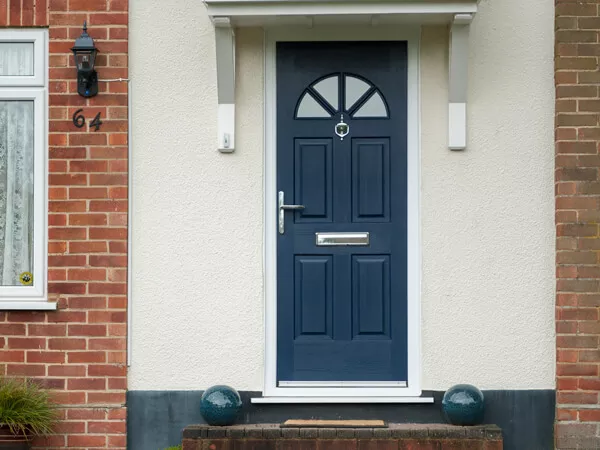
Door thickness & frame rebate
When measuring composite doors (we’ve defined a composite door meaning for you) or any door, you need to measure both the door thickness and the rebate. Fortunately, it’s simple to do.
- Locate the edge of the existing door (the part that sits inside the frame when closed) and measure the door’s thickness from one face to the other with a ruler.
- Then measure the rebate by recording both its width and depth.
- For a snug, flush-fitting door that seals firmly when shut, the new door’s thickness must correspond with the frame rebate.
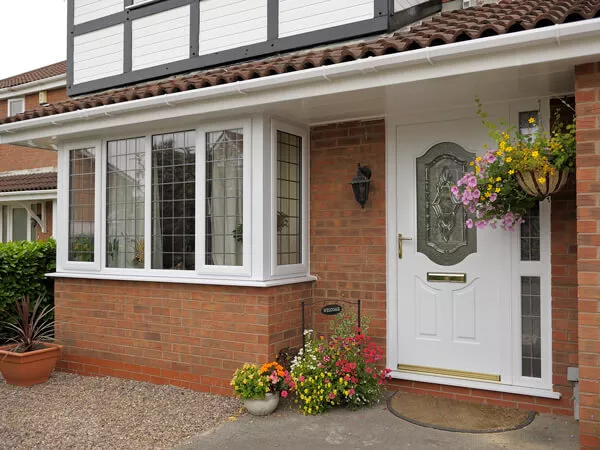
Ensure you have the right tools
You can avoid an ill-fitting door by being prepared and using the right kit. All you need is a rigid metal tape measure, a pencil and some paper.
Don’t start measuring until any obstructions have been cleared and any door stops or trims that might get in the way have been removed.
Use metric millimetres for accuracy and record the largest measurements for width, height and depth. Double-check everything to catch any mistakes before you place an order.
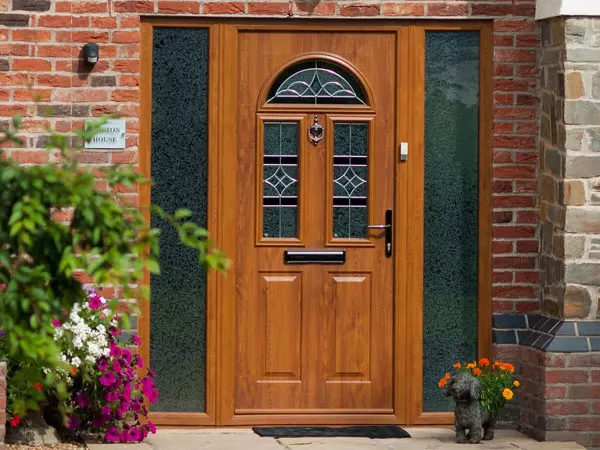
Clearances, trimming and floor coverings
An important tip when learning how to measure a door is to allow for the necessary clearances around its edges.
A gap of around 3mm at the top and sides and 9mm at the bottom usually provides smooth operation and allows for any future expansion or contraction.
Make sure the bottom clearance is sufficient to prevent carpets or tiles from obstructing the door’s movement.
Always follow the trimming limits in the manufacturer’s guidelines to ensure your new door fits perfectly and functions flawlessly.
We can also advise on the best colours for front doors while you’re looking around for your perfect fit and style.
Match your measurements to UK standard sizes (and know when to choose a bespoke door)
Once you’ve taken your measurements, compare them with the UK’s common standard internal door sizes, which range from 540mm to 838mm in width, 1981mm or 2040mm in height, and 35 to 44mm in thickness.
Check if a standard door will fit by calculating the expected clearances: 2-3mm at the top, 2mm at each side, and 8-10mm at the bottom. If these gaps can be achieved with trimming, a standard door should work.
Opting for a bespoke door is the safest choice if the opening exceeds standard dimensions, the frame is significantly out-of-square, or a non-standard thickness is required.
If measuring a door feels a little daunting, let the experts at TWC handle it. We have many years of experience with measuring doors and it’s all part of the service when you choose one of our door designs. We’ll arrange for a specialist to visit, check the opening, and take the exact measurements needed to ensure your new door fits perfectly.
Request your free quote today!
Simply fill in your details for your free, no obligation quotation, and click "Get Quote"
Want to speak with an Advisor? Give us a call on 01793 781413
Our friendly team will be pleased to help with any questions you may have.